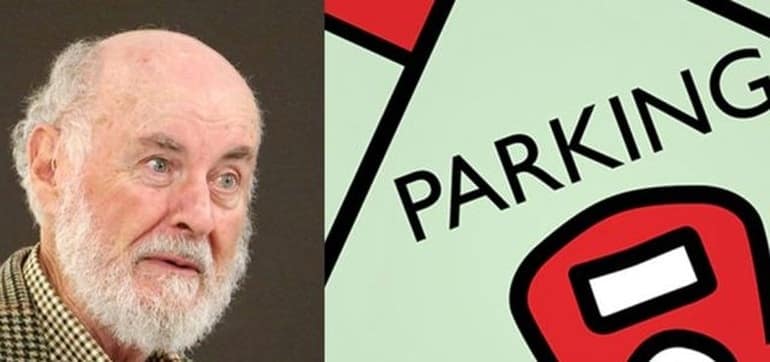
 Dive Brief: Donald Shoup, a research professor of urban planning at the UCLA Luskin School of Public Affairs, has three new recommendations for how cities plan parking in the follow-up to his landmark 2005 book, “The Cost of Free Parking.” In his new book, entitled “Parking and the City,” Shoup recommends cities remove requirements for off-street parking; charge the right prices for on-street parking; and spend parking revenue to improve public services on metered streets.
“Each of these policies supports the other two,” Shoup wrote. He said these changes would reverse trends from the early years of cars: separated land uses, low density and ample free parking to create drivable cities while undermining walkable neighborhoods.
Dive Insight: Shoup’s book has been widely cited as cities debate how to reduce parking to make room for other modes of transportation or other land uses. With the expected influx of autonomous vehicles (AVs), which could make parking lots and garages more redundant in cities, more space is likely to become available for alternative uses.
Some of Shoup’s recommendations are already filtering into cities as they tweak parking policies. Seattle recently removed requirements for some residential buildings to have off-street parking amid a wider reform of its parking rules. In a statement, Council Member Rob Johnson said the glut of cheap parking “increases driving and traffic congestion, increases our carbon footprint, and makes housing more expensive.” Los Angeles has had a similar plan proposed.
Shoup argues that reforming pricing for on-street parking, including varying it dynamically throughout the day, can keep a few spaces open while allowing convenient access, easing congestion, conserving fuel and reducing pollution from cars idling and cruising for parking. That effect has already been seen in San Francisco, which has demand-based pricing at 7,000 metered spaces and 14 city-managed parking garages, hoping to increase parking turnover and reduce congestion.
Demand-based parking can be made more palatable if revenue supports public services on those streets, Shoup writes. “If everybody sees their meter money at work, the new public services can make demand-based prices for on-street parking politically popular,” he said. Cities must think strategically about their parking needs and how those will change, and how it will be balanced with innovations like ride-sharing zones that have been trialed in several cities. Public opposition to reducing any parking remains fierce in some quarters, but Shoup has called on the “feeding frenzy” of academics and city leaders studying this issue to pay it attention as part of a wider transportation plan.